If you’re choosing a new digital product platform, you may be considering Kajabi. So is Kajabi worth it? Let’s explore in this Kajabi review.
It’s one of the biggest names in the online education space, particularly among coaches, course creators, and digital product businesses. And there’s a good reason for that: Kajabi is an incredibly powerful all-in-one platform that can handle almost every part of an online business.
But here’s the thing.
There’s never just one right answer when it comes to course platforms.
I’ve worked with a lot of different course platforms over the years, both for my own business and for clients. I’ve been actively working with Kajabi for at least five years, and I currently support multiple clients with their Kajabi setup, backend automations, offers, products, and customer experience.
So yes, I know Kajabi very well.
And despite all of that experience, Kajabi can still drive me absolutely crazy.
So, is Kajabi worth the money? Should you use Kajabi for your online course or membership? And when does an all-in-one platform actually make sense?
Let’s get into it.
Listen to the full episode here:
What is Kajabi?
Kajabi is an all-in-one platform designed for online businesses, particularly course creators, digital product creators, coaches, and membership businesses.
Instead of using separate platforms for your website, email marketing, online courses, sales pages, checkout, and automations, Kajabi allows you to manage all of these things in one place.
With Kajabi, you can create:
- A website
- Landing pages
- Sales pages
- Online courses
- Digital products
- Memberships
- Coaching offers
- Email campaigns
- Automated email sequences
- Lead magnets and opt-ins
- Checkout pages
- Sales funnels
- Customer automations
- Community spaces
Your customers or students also get their own login and personalized area where they can access the products they’ve purchased.
That’s the biggest selling point of Kajabi.
It’s not just a course platform. It’s designed to be the infrastructure for your entire online business.
And that can be incredibly valuable. But it can also be complete overkill.

How much does Kajabi cost?
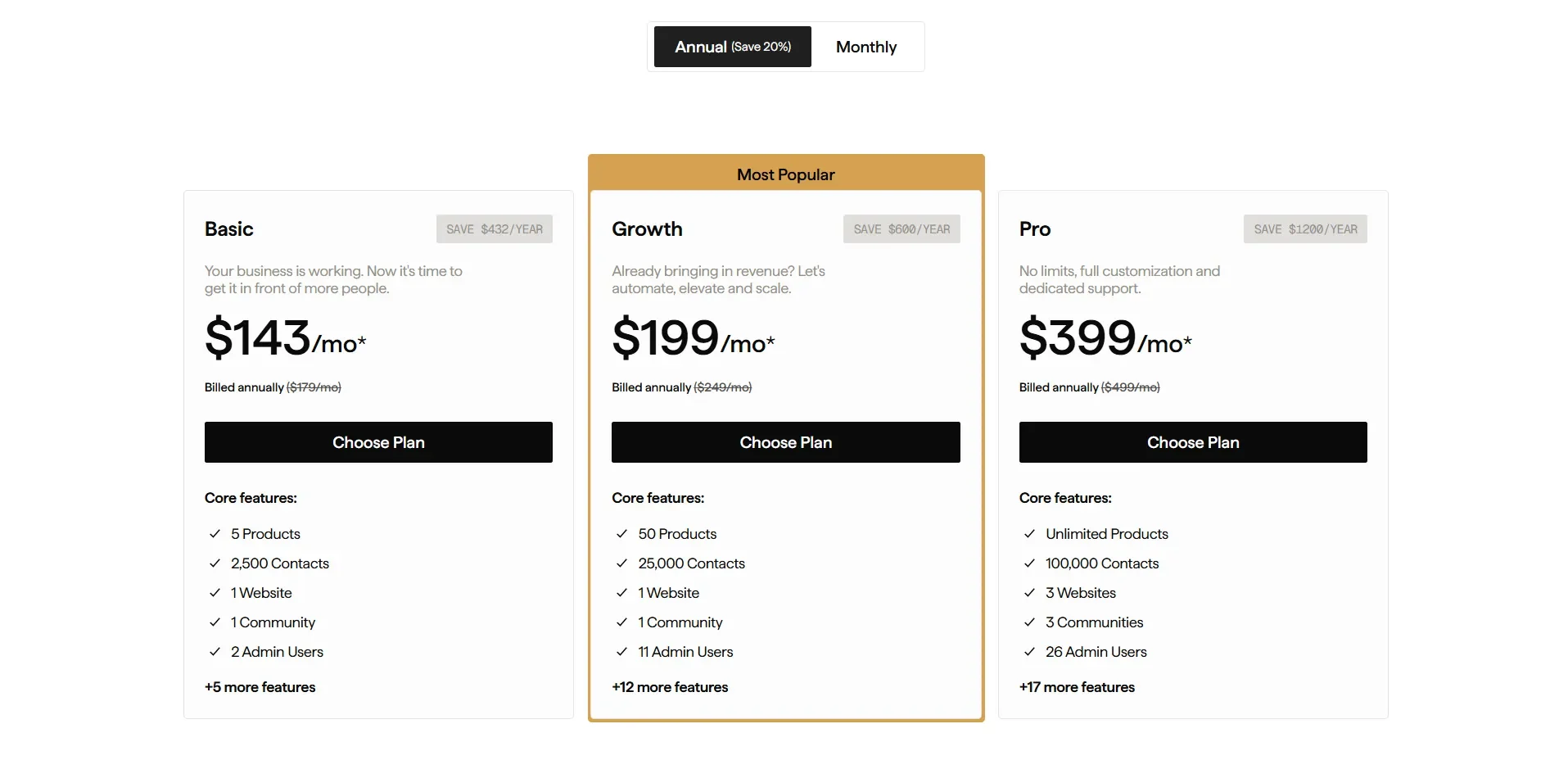
One of the biggest reasons people ask me whether Kajabi is worth it is the price. Kajabi isn’t a cheap course platform.
At the time of writing, Kajabi’s Kickstarter plan starts at $89 per month. It provides the basic functionality, but it doesn’t include automations.
That’s important because one of the main reasons people choose Kajabi is to have an all-in-one platform with sophisticated marketing and automation capabilities.
The regular Basic plan starts at $179 per month when paid monthly, although Kajabi also offers discounts for annual plans. So we’re talking about a significant monthly investment.
And that’s where you need to stop and ask yourself:
What am I actually getting for that money, and will I use it?
Because paying for features you don’t need doesn’t make your business more sophisticated. It just makes your software bill more expensive.
Especially while there are plenty of free and low-cost options to go for until it’s worthwhile for you.
Why do course creators choose Kajabi?
The biggest advantage of Kajabi is convenience.
Instead of having:
- WordPress for your website
- MailerLite or ConvertKit for email marketing
- Teachable or Thinkific for your courses
- Another tool for automations
- Another tool for your community
…you can potentially put all of those pieces inside Kajabi.
For someone who wants an all-in-one online business platform, that’s incredibly appealing. You don’t have to figure out how to connect five different systems. You don’t have to worry about whether your email platform is communicating correctly with your course platform. You don’t have to manage multiple subscriptions. Everything can live inside one ecosystem.
That’s a huge benefit.
Kajabi can be a great choice if you want an all-in-one platform
If you’re building a business where you want more than simply selling an online course, Kajabi starts to make much more sense.
For example, perhaps you want to:
- Sell multiple online courses
- Build a membership
- Offer coaching
- Create lead magnets
- Build email sequences
- Create sales funnels
- Automate customer journeys
- Build a full website
- Publish content
- Create landing pages
- Manage your community
- Have your entire business in one place
In that situation, Kajabi can be incredibly powerful.
You’re not paying $179+ per month simply for a place to upload videos. You’re paying for an entire business ecosystem. And that’s a very different calculation.
Kajabi can also be incredibly complicated
Here’s where my relationship with Kajabi gets complicated.
Yes, you can build almost everything you need inside the platform.
But setting everything up properly is another story.
Kajabi’s backend can be complex.
There are products, offers, pipelines, email sequences, automations, tags, forms, pages, checkout settings, access settings, notifications, customer journeys, and plenty of little details that can easily be overlooked.
And if you’re not familiar with how all of these pieces work together, the setup process can take a lot of time.
If your goal is simply:
“I have a course. I want somewhere to put it and start selling it.”
Kajabi might not be the easiest option.
You could potentially get a simpler course platform set up in an evening.
With Kajabi, you may find yourself spending hours figuring out why a particular email isn’t sending, how an offer is connected to a product, whether a customer has the right access, or why your checkout experience isn’t behaving the way you expected.
That’s where Kajabi can become frustrating.
Don’t underestimate the Kajabi learning curve
One of the things I see frequently is creators choosing Kajabi because they want things to be easier. And ironically, they sometimes make things harder for themselves.
They think: “It’s all in one place, so it must be easier.”
Not necessarily.
An all-in-one platform means there are more things to learn.
If you only need a simple course checkout and student portal, having hundreds of additional features doesn’t necessarily improve your experience. It can actually create more decisions.
So if you’re considering Kajabi, don’t just ask:
“Can Kajabi do this?”
Of course it can.
Ask:
“Do I actually need Kajabi to do this?”
That’s a much more useful question.
You’re paying for features – make sure you use them
Another common issue is that creators sign up for Kajabi because of all the features but end up using only a fraction of them.
If you’re paying a premium price for an all-in-one platform, you should actually take advantage of the all-in-one functionality.
Otherwise, you’re potentially paying for a lot of unused software.
For example, if you’re already happy with your existing:
- Website
- Email marketing platform
- Course platform
- Sales page builder
- Checkout system
…and you’re thinking about adding Kajabi on top of everything else, stop.
You may simply be creating a redundant expense.
There needs to be a compelling reason to move your business into Kajabi.

Is Kajabi worth it?
Consider your existing business setup
If you’re starting completely from scratch, Kajabi can be an attractive option.
You don’t have to migrate anything. You can build your website, email marketing, products, funnels, and customer experience from the beginning.
But if you’ve already been in business for several years, your situation is different.
Maybe you already have:
- A website
- An email list
- An email marketing platform
- A course platform
- A checkout system
- A community
- Existing automations
In that case, you need to consider whether moving everything to Kajabi will genuinely improve your business.
Sometimes it will. Sometimes you’ll simply spend a lot of money and a lot of time moving things around because Kajabi seems like the “professional” choice.
Don’t do that.
Kajabi won’t make your course sell
This is probably the most important point I want to make.
Your course platform does not determine whether your course succeeds.
Kajabi won’t magically make your offer sell.
- It won’t create demand for your course.
- It won’t make your audience trust you.
- It won’t improve your course content.
- And it won’t automatically create successful launches.
You can have the most beautifully designed Kajabi website in the world and still have zero sales.
Your offer, audience, positioning, messaging, marketing, and sales strategy matter much more.
In fact, I’ve seen plenty of successful course businesses running on relatively simple platforms. And I’ve seen businesses with expensive, sophisticated tech stacks struggle to make sales.
The technology isn’t the business. It’s the infrastructure supporting the business.
Don’t choose Kajabi because everyone else is using it
There’s also a weird kind of peer pressure around Kajabi, particularly in the coaching industry.
Everyone seems to be using Kajabi.
You start thinking:
“Maybe I need Kajabi too.”
You don’t. There is nothing inherently more successful about having your course on Kajabi. Your customers aren’t going to buy your course because you use Kajabi. And they’re certainly not going to care that you’ve upgraded to the expensive plan.
Choose your platform based on what your business needs – not because it seems like the platform everyone “serious” about online business is supposed to use.
Think about the student experience too
As a creator, Kajabi gives you an enormous amount of flexibility. But that doesn’t automatically mean the student experience will be better.
Personally, I don’t particularly love the student experience I get with some Kajabi courses. I tend to prefer simpler, more seamless course environments. That’s partly because Kajabi gives creators so many things they can customize.
If you don’t know what you’re doing, you can end up creating an experience that feels cluttered or confusing. And this is something I see quite often. Creators invest in Kajabi but don’t fully optimize the customer journey. There are little pieces of the student experience that get overlooked because the creator didn’t realize they needed to configure them.
So if you’re going to invest in Kajabi, don’t just set up the course content. Optimize the entire customer experience.
Related read: The most popular Kajabi mistakes fixed
When is Kajabi worth it?
So, after all of that, is Kajabi worth it?
Yes.
For the right business.
I think Kajabi is worth considering if:
- You want an all-in-one online business platform
- You plan to use most of its features
- You want your website, email, products, funnels, and automations in one place
- You sell multiple digital products
- You have courses, memberships, or coaching offers
- You want sophisticated customer journeys
- You’re willing to invest time into learning the platform
- You have a clear strategy for your business
- You’re financially comfortable with the monthly investment
In that situation, Kajabi can be an excellent platform.
When Kajabi probably isn’t worth it
On the other hand, I would think twice about Kajabi if:
- You’re just starting your online business
- You only have one simple product
- You haven’t validated your course idea
- You don’t have an audience yet
- You aren’t making consistent sales
- You don’t need advanced automations
- You already have a website and email platform you like
- You’re primarily looking for somewhere to host your course
- The monthly price would put pressure on your business
If you fall into that category, a simpler and less expensive platform may be a much better starting point.
You don’t need Kajabi to build a successful course business
This is something I really want new course creators to understand.
You can build a successful online course business without Kajabi.
- You can start small.
- You can use simple tools.
- You can sell manually.
- You can learn as you go.
And then you can upgrade your technology when your business actually requires it.
In fact, when I look at my own clients, the people making the most money aren’t necessarily the people using Kajabi.
That’s obviously not scientific data – it’s simply what I’ve observed across my own client base.
But it does illustrate an important point:
The platform isn’t what makes the business successful.
A great product, a clear offer, an audience, and an effective marketing strategy are much more important.
What about using multiple platforms instead?
There’s a common argument that paying for several different tools will eventually cost as much as Kajabi.
And that’s sometimes true.
For example, if you pay separately for your website, email marketing, course platform, landing pages, and other tools, your monthly software costs can add up quickly.
But don’t assume that means Kajabi is automatically cheaper.
There are plenty of ways to build a streamlined tech stack without paying Kajabi’s price.
The right comparison isn’t:
“How much would five random tools cost?”
Instead, ask:
“What does my business actually need right now, and what’s the most efficient way to provide it?”
That’s the comparison that matters.
Final thoughts: is Kajabi worth it?
Kajabi can absolutely be worth the investment.
If you have a bigger vision for your online business and want your website, email marketing, courses, memberships, funnels, automations, and community all working together inside one platform, Kajabi is one of the strongest all-in-one options available.
But if you’re just getting started, you probably don’t need all of that yet.
And honestly, I’d much rather see you launch your course on a simple platform and make sales than spend six months perfecting your Kajabi setup without ever putting an offer in front of a customer.
Because at the end of the day, your platform is just the tool. Your business is what you’re building with it.